I Used to Stop the Line to Train People
A plant head on the impossible maths of training — every hour spent teaching a new operator on live equipment was an hour the line wasn't producing.
Every plant head lives with the same ugly equation, and most of us just stop talking about it: to train a new operator, you have to stop making money.
You can't train someone on a production line that's running flat out. So you slow it, or stop it, or pull an experienced hand off their station to stand over the new one — which slows things down anyway. Every hour of training was an hour of lost output, or a senior operator not doing their real job. Training was, in pure operational terms, a cost we paid in downtime. So we trained as little as we could get away with. Which meant people learned half of what they should have, which meant errors, which cost us more later. A trap.
And it got worse across plants. I run more than one site, and "trained" meant something slightly different at each. Same job, different habits, different shortcuts, different quality. There was no single standard, because training lived in the heads of whichever senior person happened to teach it at each location.
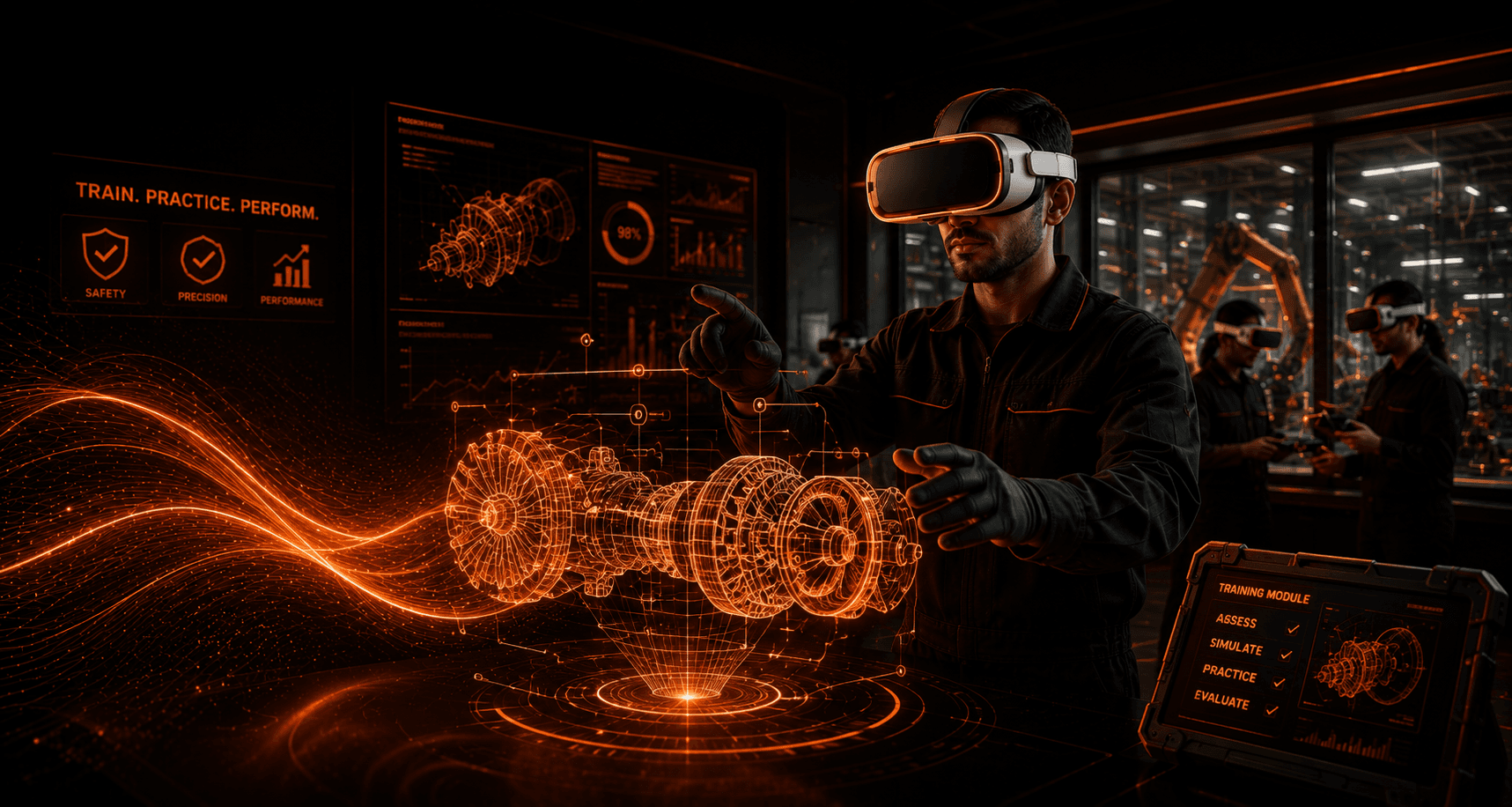
Moving training into simulation broke the equation I'd assumed was unbreakable.
Now a new operator trains on a perfect virtual replica of the line — fully, thoroughly, as many hours as they need — without touching the real line or stopping production for a second. The line keeps making money while the operator gets properly trained alongside it. The downtime cost of training, the thing that had quietly limited how well we trained people for years, simply went away.
And because every plant now trains on the same simulation, "trained" finally means the same thing everywhere. Same standard, same sequence, same quality, whether you walk into my biggest plant or my smallest. The inconsistency that used to creep in from a dozen people teaching a dozen slightly different ways — gone. There's one correct way now, and everyone learns it.
The result I didn't expect: we train people *more* now, not less, because it no longer costs us output to do it. Better-trained operators, fewer errors, consistent quality across sites, and the line never stops to make it happen.
I'd made peace with training being a necessary drag on production. It turns out it only had to be, as long as the only classroom was the live machine.
Want to see immersive training running in your industry?
Book a Demo →