My First Time Should Never Have Been on a Real Patient
A medical trainee on the terrifying gap between studying a procedure and doing it on a living person for the first time — and the practice that finally filled it.
There's a moment every medical trainee dreads and few talk about honestly: the first time you do a procedure on a real, living patient. Because for many procedures, that genuinely *is* your first time. Not your first time reading about it. Your first time doing it. On a person.
The training pipeline has a cruel gap in it. You study the procedure exhaustively — textbooks, diagrams, videos, watching others. And then, with limited hands-on practice (cadavers are scarce, supervised opportunities are few, and you only get so many reps before you're expected to perform), you do it for real. The leap from "I've read about this and watched it" to "I am now doing it to a human being whose wellbeing depends on me not fumbling" is enormous and terrifying. And the patient on the other end of that leap deserved someone who'd done it more than zero times.
I lost sleep over this. Not because I was unprepared in knowledge — I knew the theory cold. But knowing and doing are different, and the gap between them was supposed to be crossed, for the first time, on someone real.
Repeatable simulation let me cross that gap dozens of times before a patient was ever involved.
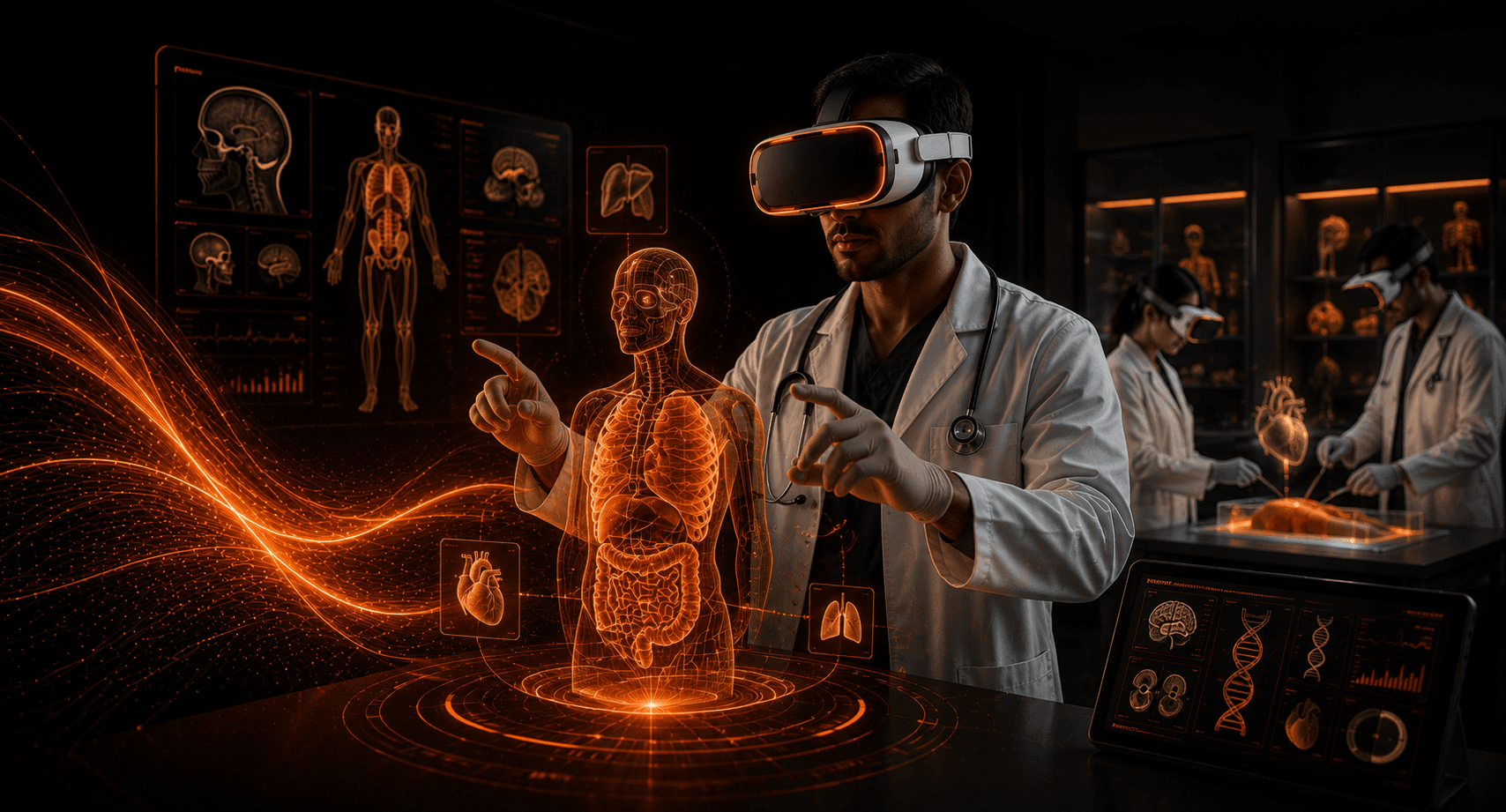
I practised the procedure in immersive simulation again and again. I fumbled the early attempts — got the sequence wrong, mishandled the steps, made exactly the mistakes a first-timer makes — and I made them in a simulation, where the only thing harmed was my pride. I repeated it until my hands knew it, until the sequence was automatic, until I'd encountered the things that can go wrong and learned to handle them. By the time I faced a real patient, it wasn't my first time. It was my fortieth. The terrifying leap had become a confident step, because I'd already taken it, safely, many times over.
The patient got a trainee who had genuinely practised, not one who was attempting it for the first time and hoping. That's not a small thing. That's the difference, sometimes, between a good outcome and a bad one.
I still feel the weight of working on real people — I always should. But I no longer feel the specific terror of the true first time, because the simulation absorbed all my first times. My real first patient got my well-practised hands, not my trembling ones.
A first attempt should never happen on a living person. For the first time in medical training, it didn't have to.
Want to see immersive training running in your industry?
Book a Demo →