Quality Used to Depend on Who Was on Shift
A quality inspector on the uncomfortable truth that 'quality' varied with who was inspecting — and how training the inspector's eye made it consistent.
Here's an uncomfortable truth about quality inspection: for a long time, the quality of our quality control depended on who was on shift.
Inspection is judgment. You're trained to spot defects, but how well you spot them depends on your experience, your eye, your attention that day. A veteran inspector catches a subtle flaw a new one walks right past. So the same product, inspected by two different people, could get two different verdicts. Our "standard" wasn't really a standard — it was an average of everyone's individual eyes, and some of those eyes were sharper than others. A defect that one inspector would have caught could slip through on another inspector's shift and reach a customer. Quality wasn't consistent, because the inspectors weren't, and there was no good way to train the eye except years of experience.
You can't put "the eye" in a manual. It's pattern recognition built over time, by seeing thousands of examples. New inspectors had to slowly accumulate that on the job, catching some defects and missing others while they learned, which meant our quality had a built-in weak spot wherever a less-experienced person was working.
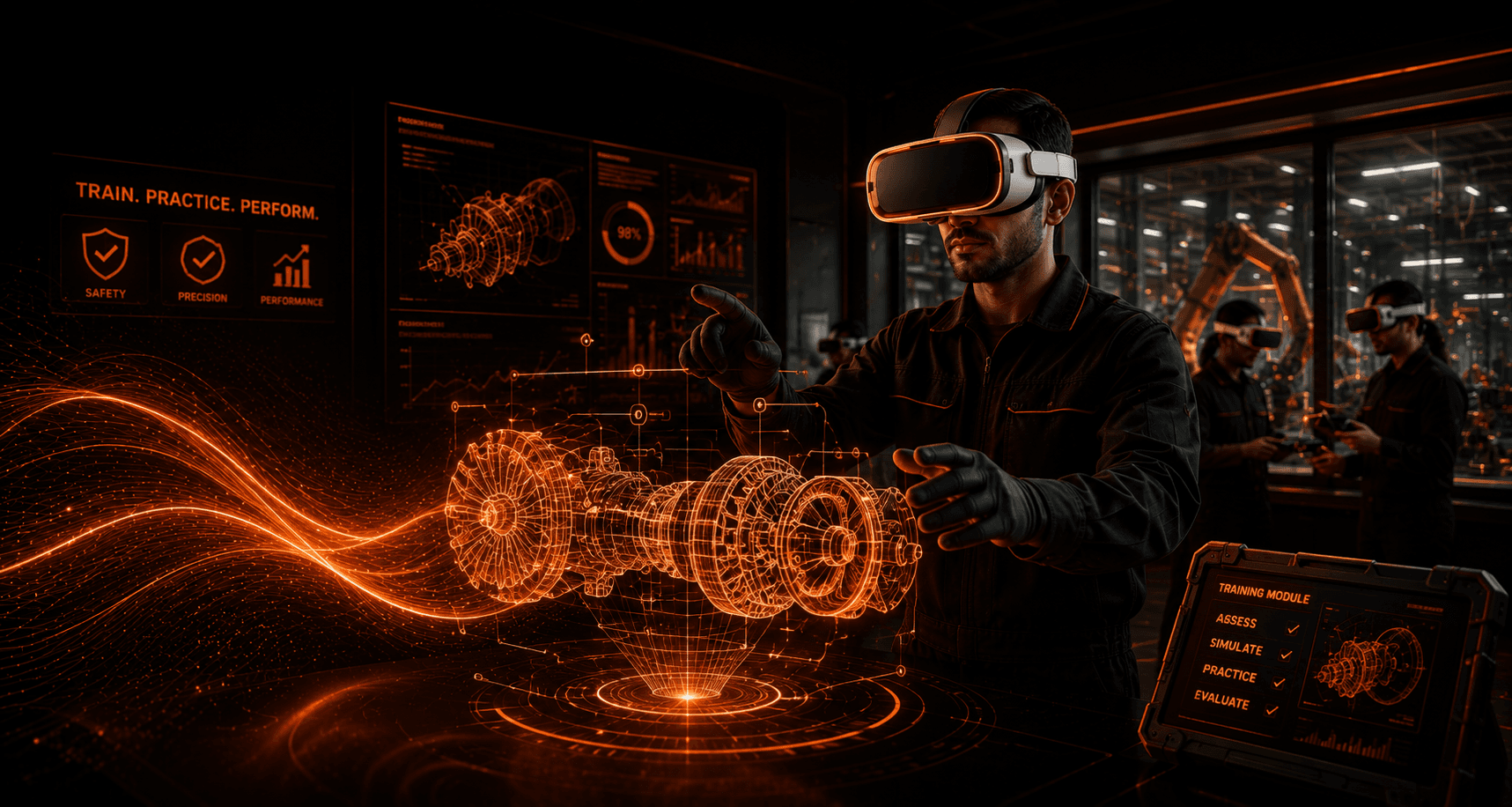
Immersive inspection training let us build the eye deliberately, instead of waiting years for it to develop by accident.
In the simulation, a new inspector sees defect after defect after defect — every type, subtle and obvious, far more examples than they'd encounter in months on the real line, and with immediate feedback on what they caught and what they missed. They're training the pattern recognition directly and rapidly, building in weeks the kind of eye that used to take years. And everyone trains on the same examples to the same standard, so the judgment converges instead of varying by individual.
Now a defect that should be caught gets caught regardless of who's inspecting, because every inspector has been trained on the same comprehensive set of examples until their eye is genuinely calibrated. Quality stopped depending on the luck of who was on shift.
The veterans still have something the newer ones don't — there's no fully replacing decades of experience. But the gap is far smaller now, and the floor is far higher. The weakest inspection on the floor is much better than it used to be, because we stopped leaving the inspector's eye to chance and started training it on purpose.
Want to see immersive training running in your industry?
Book a Demo →