They Nodded Through Every Safety Briefing
A safety officer on the futility of slides — and the day workers learned a hazard by experiencing its consequence, with nobody hurt.

I gave the same safety briefing for years, and for years, people nodded through it.
It's not that they didn't care. It's that a slideshow about a hazard is an abstraction, and abstractions don't change behaviour. I'd show a photo of a guard that should be in place, recite the rule, watch forty people nod, sign the attendance sheet, and know — *know* — that most of them would forget it by the time they were back on the floor. The incidents I was trying to prevent kept happening anyway, often to people who'd sat through my briefing the week before. You cannot scare someone into caution with a bullet point.
The thing about safety is that the lesson that actually sticks is the accident itself — and that's exactly the lesson we can't afford to let people learn. So we settle for the weak version, the briefing, and hope.
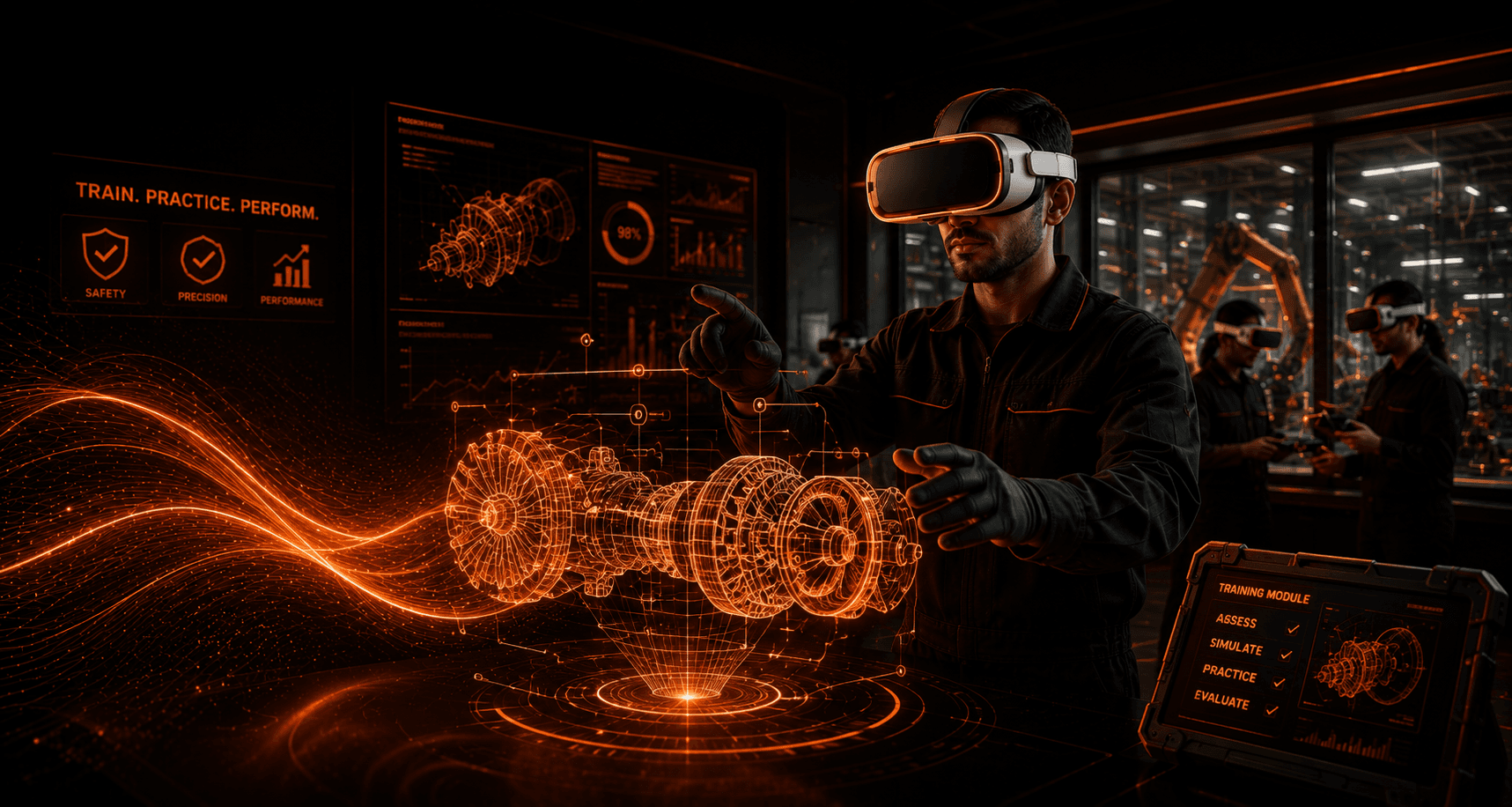
Immersive safety training gave me a third option I'd never had: let them experience the consequence, without the consequence.
In the simulation, a worker can do the unsafe thing — skip the lockout, reach past the guard, ignore the procedure — and then *experience* what follows. Not a photo of what follows. The thing itself, in a way the body registers as real, with absolutely no one harmed. I watched a man who'd nodded through my briefings for years go pale in a headset after a simulated incident that, in real life, would have cost him an arm. He took the lockout procedure deathly seriously after that. Not because I told him to. Because he'd felt, in a safe place, what ignoring it leads to.
That's the difference between knowing a rule and believing it. My slides could make people *know* the rule. The simulation makes them *believe* it, because they've experienced the reason for it in a way no slide can deliver.
Our incident numbers are the lowest I've seen in my career, and I'm not naive enough to credit it all to one tool. But I know what changed. People stopped nodding through safety as an abstraction and started treating it as something real — because for the first time, in a place where it couldn't hurt them, it was.
You remember the hazard you walked into. We finally found a way to let people walk into it and walk back out.
Want to see immersive training running in your industry?
Book a Demo →