We Trained for the Emergency Together, Before It Was Real
An emergency nurse on the hardest thing to train — not individual skill, but a team functioning under pressure — and rehearsing the crisis together before a life depended on it.

The individual skills, we could train. The thing that actually saves a life in an emergency — a team functioning as one under pressure — we could almost never practise, until it was real.
A real emergency is not a set of individual tasks. It's a team: who does what, who calls what, how information flows, how people coordinate when seconds matter and adrenaline is high. That choreography is the difference between a good outcome and a tragedy, and it's a *team* skill, not an individual one. But how do you rehearse it? You can train each person's individual competence. You cannot easily stage a realistic, high-pressure, full-team emergency to practise on — so most teams learn to function together for the first time during an actual crisis, with a real life on the line. We were assembling the choreography live, on the patient, every time.
I'd been part of emergencies that went smoothly and ones that didn't, and the difference was almost never individual skill. It was whether the team gelled under pressure. And we'd never been able to practise that gelling. We just hoped it happened when it counted.
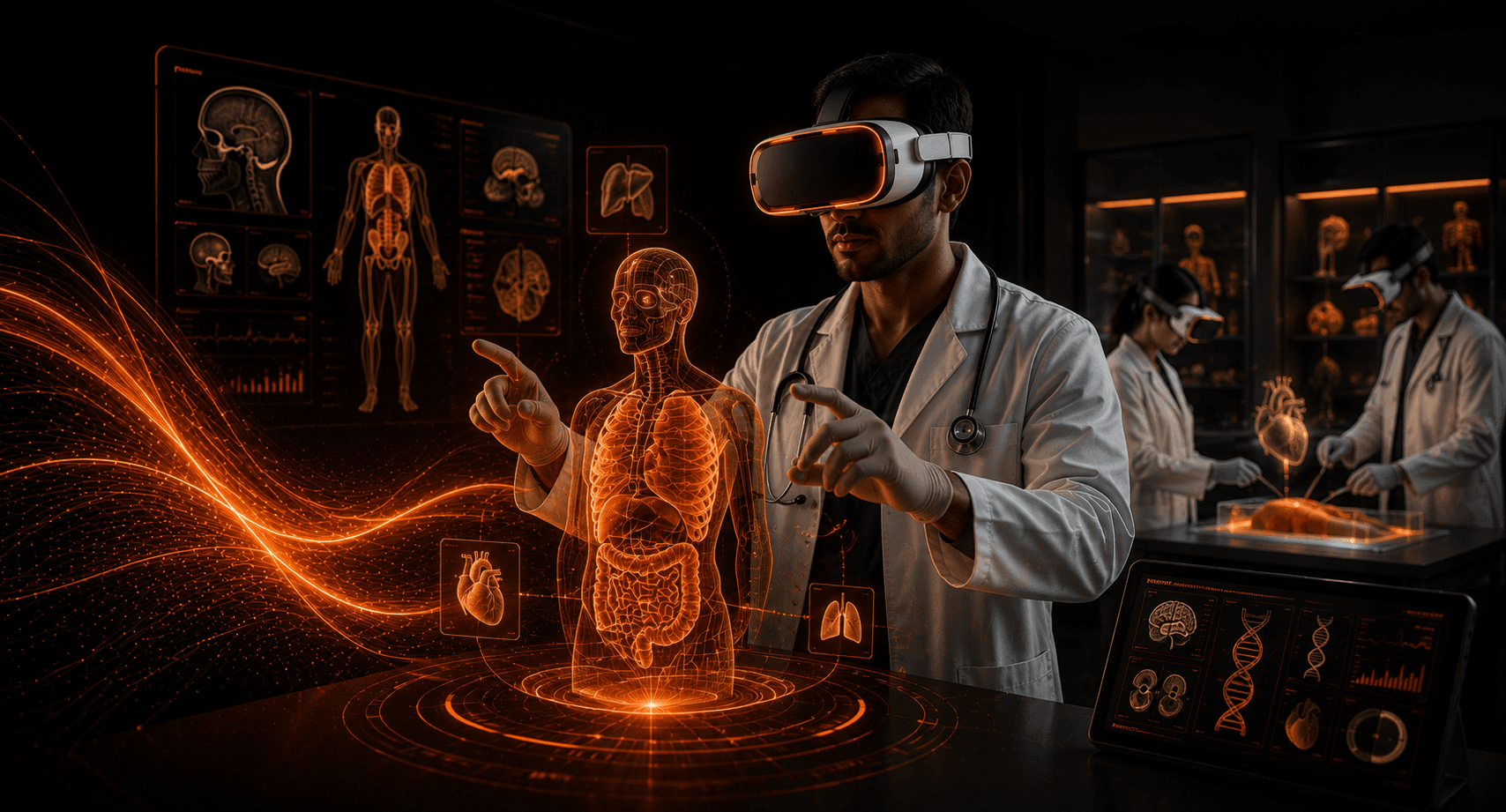
Multi-user clinical simulation let our whole team rehearse the emergency together, before it was real.
We trained as a team, in the same simulated scenario, each playing our actual role, under realistic pressure — practising the choreography itself. Who moves where, who communicates what, how we coordinate when it's chaotic. We could run the same emergency over and over, see where our teamwork broke down, and fix it — together — in a simulation where no real patient bore the cost of our learning curve. The thing we could never practise, we finally could.
The first time we faced a real version of a scenario we'd rehearsed together, the difference was undeniable. We moved as a unit. The coordination that used to be improvised in the moment was already practised, already smooth. We'd been here before, together, and it showed in a way that mattered for the person whose life was in our hands.
You can train a nurse. You can train a doctor. Training them to function as one team under pressure — the thing that actually determines the outcome — was the part we could never rehearse. Now we rehearse it before it's real, so that when it's real, we're not meeting our own teamwork for the first time.
Want to see immersive training running in your industry?
Book a Demo →