How Do You Draw an Atom on a Blackboard?
For twenty years a teacher drew the same flat, wrong picture of an atom. A reflection on the limits of chalk — and what finally replaced it.
How do you draw an atom on a blackboard? You can't. Not really. You draw a circle with a dot in the middle and some little rings with dots on them, and every science teacher in the country knows it's a lie. The atom is mostly empty space, the electrons aren't really orbiting like tidy planets, and the scale is so absurd it can't be drawn. But chalk is what I had, so I drew the lie, and my students dutifully copied the lie, and we all pretended a flat cartoon was an atom.
I did this for twenty years. The good students memorised the cartoon. The struggling ones couldn't even hold the cartoon in their heads, because it didn't connect to anything real. And how could it? I was asking them to imagine something genuinely un-imaginable from a two-dimensional sketch.
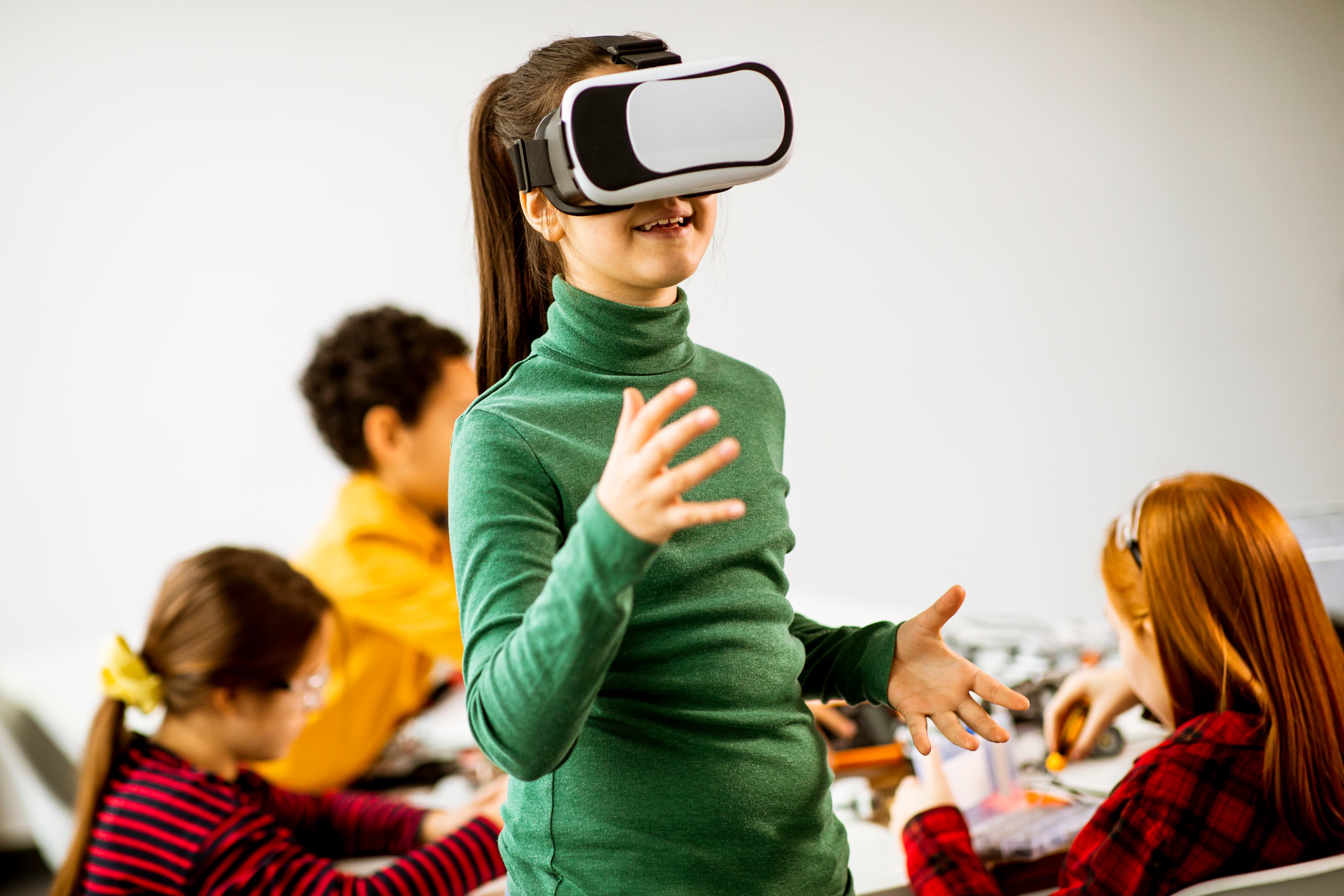
The first time my class explored an atom in VR, I stood at the side and watched their faces. That's a thing you learn to read after twenty years — the difference between a child memorising and a child *understanding*. These were understanding faces. They were inside the structure, seeing the scale of the emptiness, watching the electrons behave the way electrons actually behave instead of the way my chalk circles pretended they did.
A boy who'd struggled all year turned to me and asked a question — a genuinely good question, about why the electrons didn't just fall into the nucleus. He could only ask that question because he could finally *see* the thing well enough to be curious about it. My blackboard cartoon had never once provoked a question like that, because you can't be curious about a thing you can't picture.
I'm not sentimental about chalk. It was never good enough for the abstract stuff — atoms, cells, magnetic fields, the inside of the earth. We just had nothing better, so we convinced ourselves it was fine. It wasn't fine. I taught a generation of children flat lies about three-dimensional truths because the blackboard couldn't do any better.
Now, for the hard, invisible, abstract things, I don't have to lie anymore. I can just show them.
Want to see Abhigyaan in your school?
Book a Demo →